
Choosing a Great Wall section is the most useful decision to make before arranging a Beijing day trip. The sections below have different landscapes, transport connections and walking demands. A photograph of an empty ridge does not tell you whether that ridge is open, how far the entrance is from the wall, or whether you can return before the last transport leaves.
Start with your walking needs
For a first visit, compare Mutianyu and Badaling before looking for a more remote section. If your priority is photography and longer walking, consider Jinshanling. If your party includes someone who cannot manage steep stairs, ask about the exact accessible route: a cable car can remove an uphill approach without making the wall itself step-free.
Allow a day for the outing, including the journey from your hotel. Choose one section and leave time for admission, the internal shuttle where required, lunch and the return journey. Visiting several sections usually sacrifices the time you came to spend on the wall.
Mutianyu: a practical first visit
Mutianyu combines restored watchtowers with wooded mountain scenery. It suits travellers who want a substantial visit with the option of mechanical access, while still leaving room for a demanding stair walk. Cable-car, chairlift and toboggan arrangements are not interchangeable: check the entrance, operating company and return option on your ticket.
Do not assume that all visible towers are accessible on the day. Weather and maintenance can change the authorised walking area and the operation of lifts. Use the Mutianyu operator's notices and arrange your return transport before setting out. Tour Beijing's Mutianyu guide gives further local background.
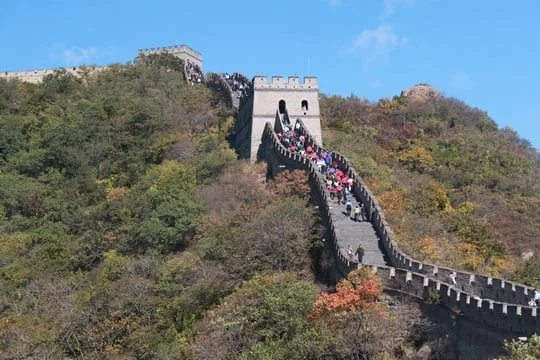
Badaling: transport choices and a celebrated landscape
Badaling is a developed visitor area with impressive mountain views and several ways to approach it. Rail and road connections can be useful, but the station, entrance and lift you choose must fit together. Check your actual train station and the walk or shuttle required at the destination; a train ticket does not include admission to the wall.
This is a popular destination, especially during holidays. Reserve according to the Badaling operator's current instructions and allow extra time for queues. Select a realistic out-and-back walk rather than assuming you must reach the furthest tower to have a worthwhile visit.
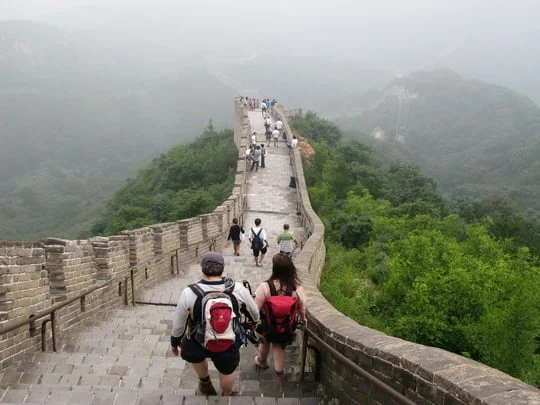
Jinshanling: watchtowers and a longer walking day
Jinshanling is a good candidate for visitors who want to spend more of the day walking between towers and looking at the wall crossing the ridges. The trip from central Beijing takes planning, and stairs, exposed sections and changing weather remain part of the experience.
Agree on the authorised walking route and a definite collection point. Do not plan a through-hike into Simatai from an old itinerary: boundaries and access arrangements are separate. Carry water, sun protection and an extra layer, and turn back early enough to reach your agreed exit comfortably.
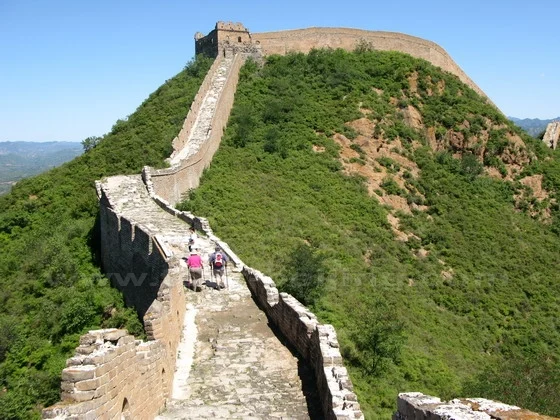
Simatai: a separate outing beside Gubei Water Town
Simatai rises steeply above the Gubei Water Town area. It is a distinct destination, rather than the far end of an assumed Jinshanling through-route. Admission combinations, access times and any evening visit need confirmation for the actual date.
Decide whether your priority is the wall, the water town or both. Combining them requires more time than a quick climb, especially when you include the journey back to Beijing. A cable-car option does not remove all steep walking; confirm the open tower range and the return arrangements with the operator.
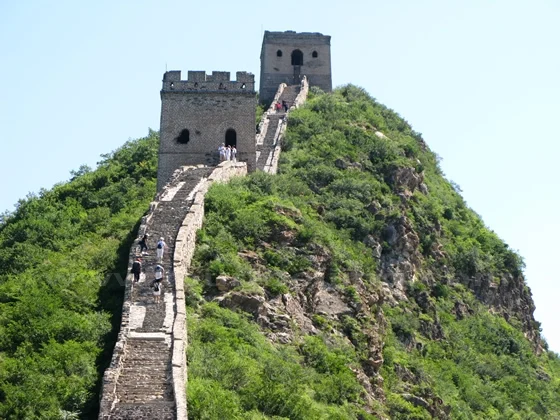
Juyongguan: a pass rather than an easy level stroll
Juyongguan offers a different perspective on the wall as a fortified mountain pass. Its position makes it a possible choice when you want a northern excursion without choosing one of the more distant ridge walks. The stair climbs can still be strenuous. Judge the day by your group's fitness and the confirmed traffic conditions, rather than treating proximity as a guarantee of a short or easy outing.
Huanghuacheng: choose the managed lakeside visitor area
Huanghuacheng is associated with the landscape where the wall meets water. Distinguish the managed lakeside scenic area from neighbouring unrestored stretches that appear in older hiking accounts. Ask which paths and activities your ticket covers, where you will enter, and whether any boat or shuttle is operating. Do not cross a closure to follow a photograph or an old route description.
Jiankou and Gubeikou: access comes before adventure
Jiankou's unrestored ridges and Gubeikou's historic setting attracted walkers in older travel accounts. That history does not establish permission to climb every section today. Beijing's official guidance on closed Great Wall sections explains the restrictions and the risks of damaged, steep masonry.
Choose a currently authorised visitor route and get clear local confirmation of access. For an ordinary first visit, a managed section is a more workable choice than an unsupported wild-wall traverse. Never assume that paying a driver or joining a group makes a closed section legal to enter.
Before booking transport
Confirm the named section, hotel collection and return point, admission, any internal shuttle, lift tickets and the walking route separately. Check cancellation arrangements for bad weather and leave margin before an onward flight or train. See our Beijing sightseeing guide for the rest of your trip. Beijing Page is associated with Tour Beijing; its Great Wall information provides related guides and services.