
Beijing shopping works best when you decide what you want from the outing. A pedestrian shopping street, a contemporary mall and a craft market offer different experiences. You might be looking for everyday supplies, a well-made gift, design shops or simply an interesting walk. Choose one area near your day's sights and leave enough time to browse without turning the whole visit into a shopping circuit.
Wangfujing: central shopping and an easy break
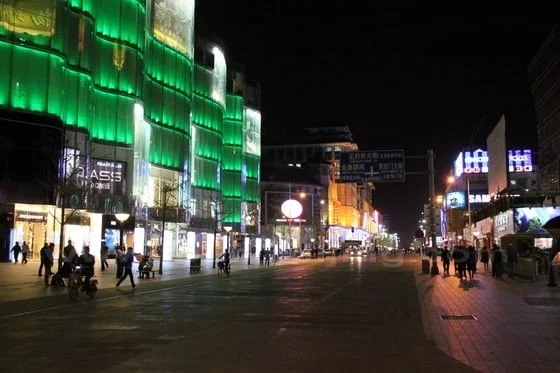
Wangfujing fits naturally into a central-Beijing day. Its shopping streets and malls offer an indoor break, food and a place to compare familiar retail goods. Choose a specific store or mall if you need something particular, because the name covers an area rather than one entrance. Check the shop's current opening information before making a special journey.
 View & share image
Wangfujing combines an evening stroll with central shopping; choose shops and dining stops around your route. Photograph: Tour Beijing.
It can be a useful setting for a relaxed evening after sightseeing, provided you leave time for the journey back. Combine browsing with a meal, but use a current restaurant address rather than an old night-market map. Our food and dining guide explains the distinction between the district and the former Donghuamen night market.
Qianmen and traditional-style gifts
The streets around Qianmen and Dashilan suit a walk that combines shops with the southern old-city setting. Look for goods that you can judge and will enjoy using: tea, stationery, textiles or a small crafted object. Compare materials and workmanship, and ask what is locally made rather than assuming an old-looking storefront guarantees a handmade product.
 View & share image
Qianmen’s pedestrian street brings traditional-style shop fronts into a central Beijing walk. Photograph: Tour Beijing.
Liulichang is another area to investigate if books, brushes, paper and calligraphy interest you. Browsing can be worthwhile even without buying. A modern reproduction can be an attractive souvenir when sold honestly as such; its value to you need not depend on a claim that it is an antique. Tour Beijing's shopping guide introduces the different shopping areas, though individual shop lists and transport instructions need current checks.
Silk Street: compare materials and terms
Silk Street remains a visitor shopping destination, with recent municipal information on its multilingual after-sales service. Before buying fabric or clothing, ask about composition, sizing, care and whether alterations are included. A label or a seller's first description is not a substitute for examining the actual item.
Find out whether a price is fixed or open to negotiation. If bargaining, agree on the exact item, quantity and final price before paying, and remain courteous if you decide to leave. For a tailored item, put the measurements, material, fitting, delivery date and remedy for problems in writing. Allow enough time to inspect it before your departure rather than planning collection immediately before a flight.
Sanlitun: contemporary retail and dining
Taikoo Li Sanlitun offers a different style of outing, combining retail and dining in eastern Beijing. Use the owner's current information to orient yourself and check the relevant store's directory or booking page. Individual shops and venues change, so an old article's list should not determine the whole journey.
This area works well when you want to browse and stay for dinner, or when you are already nearby for work. Leave time to explore on foot and decide in advance how you will return to your accommodation. A shopping district can remain lively even when a particular former hotel, shop or bar has closed.
Markets and careful purchases
For a market visit such as Panjiayuan, go with curiosity and a budget you are comfortable spending. Compare several stalls before deciding and ask permission before photographing a seller or close-up display. Inspect the item you will take away, not only a sample, and keep a receipt or written description for anything costly.
Treat claims about age, precious materials, authenticity and investment value cautiously. If the purchase requires expertise you do not have, seek independent advice or choose a clearly described contemporary piece instead. For an item sold as a cultural relic, check official export requirements before buying; a seller's assurance alone is not a reliable basis for carrying it abroad. This guide does not authenticate individual objects.
A practical shopping checklist
Check that the item will fit in your luggage and survive the journey. Ask about returns and exchanges before paying, particularly for personalised goods. For shipping, confirm the recipient details, tracking, packaging, charges and who handles a loss or customs query. Keep a photograph of the item and the paperwork separately from the parcel.
Prepare more than one payment option and check the amount shown before authorising it. For tax-refund purchases, ask the participating shop about the current official process and required documents before completing the sale. Do not assume every shop or product participates, or that a receipt alone will qualify.
Put shopping into a day out
Try Qianmen with an old-city walk, Wangfujing after a central sight, or Sanlitun with dinner and an evening activity. One well-chosen area is usually more satisfying than rushing through four markets. Use sights and neighbourhoods and transport to make the combination workable.
For additional ideas, browse Tour Beijing's shopping resources. Beijing Page is associated with Tour Beijing. Recommendations here concern areas and shopping methods; current stock, opening hours and sale terms come from the shop you choose.