
Beijing is China's capital and a city of several different scales: the ceremonial heart around the Forbidden City, intimate hutong neighbourhoods, wide modern avenues and distant hills. A useful first step is to separate what belongs in one day's walk from what needs a longer journey. This guide covers the practical foundations of a visit; follow the topic guides for detailed sightseeing, dining and transport choices.
Understand the city
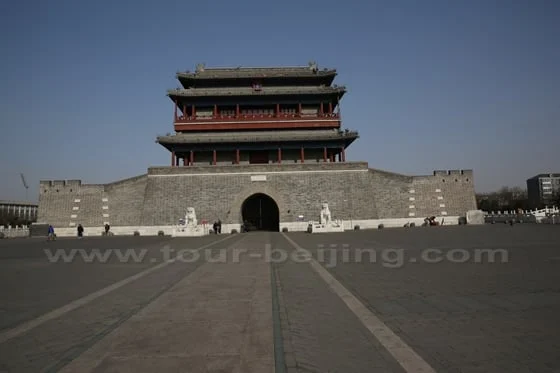
The old city's north–south alignment helps make sense of the map. The Central Axis connects imperial, religious and civic places, while lakes and residential lanes spread out to its sides. UNESCO inscribed the Beijing Central Axis in 2024. You do not need to walk its whole length to appreciate it: combine a major building with a nearby park and time in the surrounding streets.
 View & share image
Yongdingmen anchors the southern end of Beijing’s historic central axis. Photograph: Tour Beijing.
Dongcheng and Xicheng include much of the historic centre. Chaoyang extends east into business, shopping and diplomatic neighbourhoods; Haidian includes universities and the northwestern gardens. District names describe large areas, so they are a poor substitute for a hotel's precise location. Save the street address, nearest metro station and entrance instructions before arrival.
Entry documents and reservations
Visa arrangements depend on nationality, travel document, purpose and itinerary. Consult the National Immigration Administration and the Chinese embassy or consulate responsible for your passport. Short visa-free entry and visa-free transit are different arrangements. The NIA's current transit explanation sets out the eligible routes and permitted areas; a simple return journey to the same country should not be assumed to qualify.
Keep the name and passport details on reservations consistent with your travel document. Carry the document used to book when visiting attractions or taking a train, and keep a secure copy separately. A hotel booking, a museum reservation and permission to enter China serve different purposes. Check each one before committing to a tightly timed itinerary.
Money and everyday payments
Prepare a bank card, some renminbi cash and, if useful to you, a supported mobile wallet. Set up and test the wallet while you can still receive verification messages. A card logo on a payment service does not guarantee that every card or issuer will complete every transaction. Keep a second option for a small shop, an unsuccessful payment or a phone with a flat battery.
Beijing's municipal portal publishes payment services for international visitors. Consult the current instructions for card linking, identity checks and fees. When paying, verify the amount and merchant, and retain receipts for accommodation and larger purchases. Ask whether an advertised price is per person, per room, per dish or for a whole package.
Weather, clothing and pacing
Plan for outdoor walking and indoor breaks. In colder weather, bring layers suitable for exposed courtyards and windy hilltops; in warm weather, carry water and leave time to rest. Spring blossoms and autumn colour vary with the season's weather. A previous year's festival date is not a promise for the current year.
Check the forecast shortly before a Great Wall or Western Hills trip and read the attraction's notices after heavy rain or severe weather. A city sightseeing day can usually be rearranged more easily than a distant excursion. Put a museum or another indoor activity on your shortlist as an alternative, while checking its reservation and closing-day requirements.
Communication and getting around
Keep destinations written in Chinese as well as English. A saved map pin is useful, but a taxi driver may also need the correct gate or building entrance. Establish how your phone will connect and receive calls or messages in China, and save essential booking details for offline use. Do not make access to every ticket depend on one application or another traveller's phone.
Metro travel is often a convenient way to avoid road congestion, but the walk from a station to an attraction's visitor entrance can be substantial. See transport planning for airport and railway-station distinctions. For a late performance, check the return journey before the show rather than assuming trains will still be running.
Courtesy and useful next steps
Hutongs include people's homes. Stay in public lanes, ask before photographing someone closely and do not enter a courtyard just because its door is open. At temples, follow signs on photography and observe worshippers without interrupting. In museums and crowded attractions, leave enough time for security checks and follow staff directions.
 View & share image
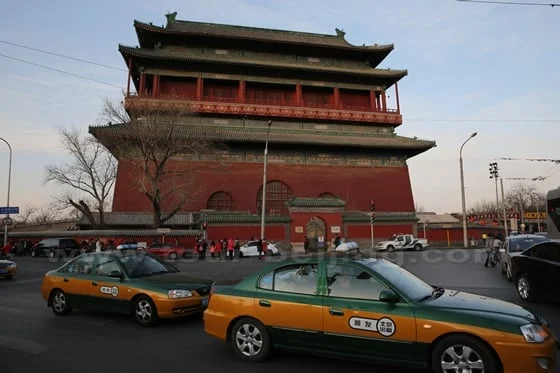
The Drum Tower is a useful landmark for exploring Beijing’s historic northern neighbourhoods. Photograph: Tour Beijing.
Start your itinerary with sights and neighbourhoods, choose a base through the accommodation guide and use food and dining to plan enjoyable breaks. For broader local context, Tour Beijing's Beijing introduction is a useful companion, while the municipal English portal supplies current official services. Beijing Page is associated with Tour Beijing.