
Fragrant Hills Park (Xiangshan, 香山公园) combines wooded mountain paths, imperial garden scenery and temple courtyards on Beijing's western edge. Come for a hillside walk and autumn colour, or spend a quieter visit around the lower gardens. Reaching the summit is an option, rather than a requirement for enjoying the park.
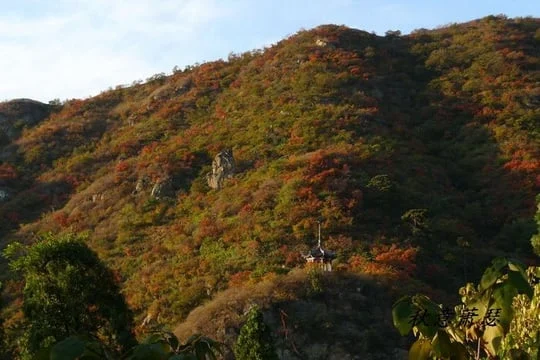
Woodland and pavilions at Fragrant Hills. Photograph: Tour Beijing.
A mountain garden with a long history
The hill formed part of the capital's imperial retreat landscape. The park traces its beginnings to 1186; in 1745, the Qianlong emperor expanded it into Jingyi Garden, the Garden of Tranquillity and Pleasure. Paths, pavilions and garden remains give the woodland a different character from a wilderness hike.
The highest point is Xianglu Feng (Incense Burner Peak), 575 metres above sea level. On a clear day, the climb opens up views across the Western Hills and toward the city. The name refers to an incense-burner-shaped rock near the top. For background, see Tour Beijing's Fragrant Hills guide.
Choose a walk that suits your day
These are suggested planning allowances, not official trail times. Follow current signs and closures, and leave time to return downhill before the park closes.
- Lower gardens: allow 2–3 hours. Start at the East Gate, visit Qinzheng Hall and the Zhisong Garden area, then choose a garden walk or head toward Jingcui Lake. This is a good choice for scenery and photography without a full summit climb. Lower slopes still include steps and uneven paths.
- Northern gardens and Biyun Temple: allow a half day. Explore the northern courtyard area and Jianxinzhai, then visit Biyun Temple if it is open. This puts architecture and garden detail ahead of altitude. The temple requires separate admission or a combination ticket.
- Summit walk: set aside a half day, longer with stops. Follow the signed route to Xianglu Feng. A southern approach passes Jingcui Lake and the Shuangqing area before joining the uphill paths. Expect a sustained climb, steps and a descent; avoid trying to fit every temple into the same outing.
A cable service offers another way up when operating, with a separate ticket. Check its opening times, weather restrictions and return arrangements on the day; it does not necessarily run for the park's full opening hours.
Sights worth slowing down for
Jingcui Lake and the lower hillside provide a gentler introduction to Xiangshan. Look for reflections, garden planting and nearby pavilions before deciding how far uphill to continue.
Shuangqing Villa sits on the southeastern hillside and takes its name from two springs. Mao Zedong lived and worked here in 1949; the compound is a cultural stop with historical displays, rather than simply another viewpoint. Its exhibition hours are shorter than the main park's.
Jianxinzhai offers a more intimate courtyard setting in the northern area, with ornamental windows, water and old trees. It suits visitors who enjoy traditional Chinese garden detail and a slower pace.
Biyun Temple (Temple of Azure Clouds) is a separate temple complex on the park's northern side. Its courtyards climb the slope; the Arhat Hall and Diamond Throne Pagoda are particular highlights. Allow time for the stairs and architecture rather than treating it as a quick stop on the way to the peak. See Tour Beijing's Biyun Temple introduction for more about the buildings.
Autumn leaves and the best time to visit
Late October into early November is a useful window for planning an autumn visit, but the best colour shifts with temperature and weather. Smoke trees contribute much of Xiangshan's red foliage; different elevations and slopes change at different times. Check the park's latest leaf reports before choosing a date.
Autumn weekends attract large crowds. A weekday visit and an early arrival during permitted opening hours give you more room on the paths. Other seasons offer their own rewards: spring greenery, summer woodland and clearer winter views when conditions allow.
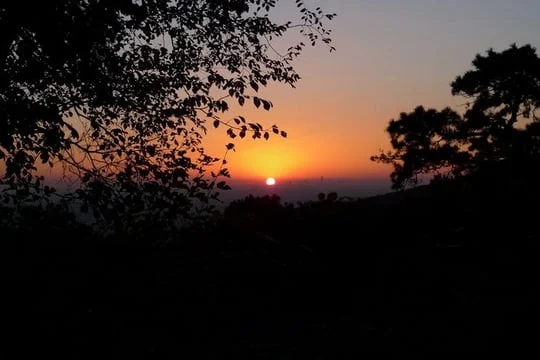
Morning light photographed by Tour Beijing. Access depends on the park's admission hours; a summit sunrise is not guaranteed.
The Tour Beijing photo essay shows the changing light and wooded ridges. For your own photographs, choose a clear day and leave enough time for the walk; do not plan around entering before the gates open.
Getting to Fragrant Hills
Take Metro Line 10 to Bagou (巴沟), leave the metro paid area and transfer to the Xijiao tram (西郊线) toward Xiangshan (香山). Xiangshan is the terminus; follow the local signs on foot toward the park entrance. The tram transfer involves a separate paid journey. Allow extra time for queues during the autumn season.
For a taxi, use 香山公园 — 北京市海淀区香山买卖街40号 (Fragrant Hills Park, 40 Xiangshan Maimaijie, Haidian). Traffic near the entrances can be slow on popular foliage days, so rail is a useful alternative.
Opening hours and tickets
Standard adult main-park information, checked 12 October 2026 against the park's official visitor information:
| Season | Main-park hours and adult admission |
|---|---|
| 1 April–15 November | Opens 06:00; last entry 18:30; closes 19:30. Park ticket: CNY 10. |
| 16 November–31 March | Opens 06:00; last entry 18:00; closes 19:00. Park ticket: CNY 5. |
Biyun Temple's standard adult ticket is CNY 10. The listed park-and-temple combination is CNY 15 in the first season and CNY 14 in the second. Cable transport is extra.
The main park's hours do not cover every building. Biyun Temple, Xiangshan Temple and the eight revolutionary historical sites close on Mondays, except public holidays. Courtyards and exhibitions have shorter visiting hours. Check current official notices for temporary changes, ticket conditions and cable-service operation, or call +86 10 6259 1222.
Make the most of the visit
Wear shoes with a good grip, carry water and choose your route before climbing. In hot weather, keep the walk modest; in wet or icy conditions, follow closures and be cautious on steps. Leave a comfortable margin for the descent and onward transport.
The nearby China National Botanical Garden can make a separate garden visit, or a second stop if you choose a shorter Xiangshan walk. For more ideas, browse Beijing sights and neighbourhoods. If you prefer help arranging transport and guiding, see Tour Beijing's Fragrant Hills and botanical-garden outing. Tour Beijing is associated with Beijing Page; confirm the current itinerary and inclusions directly.
Park orientation map
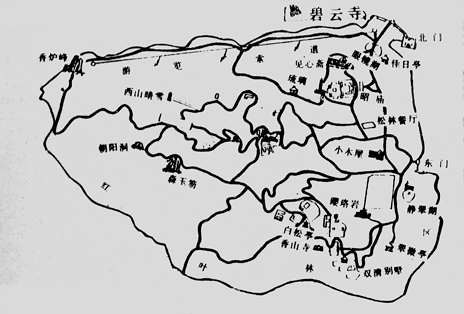
Use this schematic for general orientation. Follow the park's current signs and visitor map for open paths, entrances and facilities.