
Beijing is easier to appreciate when its streets, buildings and everyday culture are seen together. This directory brings together places to start reading, looking and learning: history, museums, libraries, architecture and public information. Use it alongside the practical Beijing guide when you want context for a visit rather than a longer list of attractions.
Read the city through its layout
The north–south Central Axis provides a useful introduction to the old capital. Palaces, gardens, ceremonial structures and later civic places show how the city's purposes have changed while retaining a recognisable alignment. UNESCO's account of the Beijing Central Axis explains the ensemble and its heritage significance; it was inscribed on the World Heritage List in 2024.
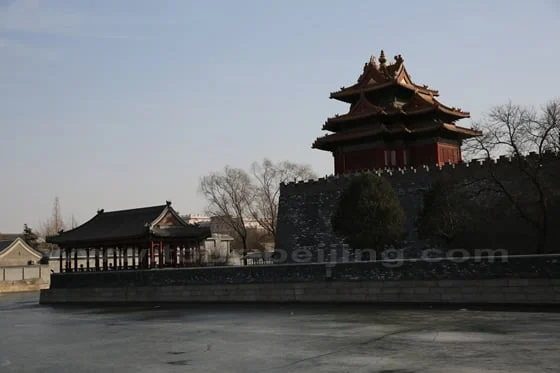
The Forbidden City’s corner tower and moat offer a view of Beijing’s imperial city layout. Photograph: Tour Beijing.
Explore a short section with attention to gateways, rooflines, courtyards and the relationship between buildings and public space. A walk around Jingshan and the palace's northern side offers one perspective; Qianmen and the southern streets offer another. The value lies in noticing how the pieces relate, not in trying to walk every part of the axis in one afternoon.
History in museums and collections
The Palace Museum is both a historic architectural complex and a collection-based museum. Plan time for a gallery that interests you as well as the main courtyards. Its official site provides visitor trails and current exhibitions, which help turn a very large visit into a focused one. Confirm admission before setting off.
For a different subject, use the Beijing municipal English portal to find museums and cultural notices, then follow the institution's own visitor information. Check the particular exhibition's dates, language, reservation requirements and location. A museum may have more than one building, and an exhibition ticket may have different conditions from ordinary admission.
Take notes or photographs of labels where permitted if you want to read further afterwards. One carefully chosen collection often adds more to a trip than several rushed museum stops. An indoor museum visit can also provide a useful change of pace between long outdoor days.
Libraries and deeper research
The National Library of China's English website introduces its collections, digital resources, exhibitions and reader services. Begin there if you are interested in books, maps or historical documents. Reading rooms, exhibitions and digital resources have different access conditions, so check the relevant service rather than assuming every area is open for casual sightseeing.
For an academic visit, contact the institution whose collection or staff you need. University libraries and campuses are working places, not automatically accessible tourist attractions. Make an appointment where required and confirm the building, documentation and permitted use of materials. A general city directory should help you find the responsible institution, not promise access on its behalf.
Neighbourhoods and daily life
Hutongs and courtyard streets reveal another scale of Beijing. Look at how lanes meet larger roads, where small shops gather and how public spaces are used. Shichahai offers lakeside paths close to residential lanes; other neighbourhoods have their own rhythm. Treat residents as people going about their day, rather than part of an exhibit.
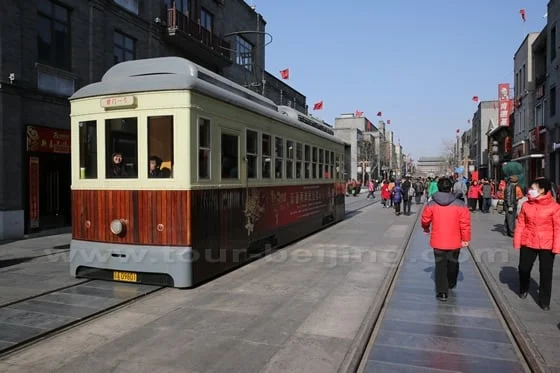
Qianmen’s pedestrian street brings traditional-style shop fronts into a central Beijing walk. Photograph: Tour Beijing.
Stay on public routes, ask before close photographs and avoid looking into private rooms or entering open courtyards without permission. A guided walk can add local context, but it should still respect the neighbourhood. Our sights and neighbourhoods guide connects these walks with nearby museums, parks and temples.
Art, performance and food culture
Contemporary galleries and performance programmes show that Beijing's culture is not confined to monuments. The National Centre for the Performing Arts publishes its calendar by genre, including concerts, dance, theatre and traditional opera. Choose a production that interests you and check the language and running time, rather than booking solely to see the building.
Food offers another introduction. A shared duck meal, noodles or hotpot can lead to questions about ingredients, regional cooking and the way meals are served. Use food and dining to make a comfortable start. For craft and design, the shopping guide encourages looking at materials and workmanship without treating every old-looking object as an antique.
Useful reference and travel resources
- Beijing municipal English portal: public services, visitor information and current city notices.
- National Library of China: collections, reader information and digital resources.
- UNESCO Central Axis entry: the heritage ensemble and its historical context.
- Tour Beijing's city introduction: an accessible starting point for broader local travel reading.
- Beijing facts and preparation: documents, payments, practical planning and courtesy.
Use the source that owns a subject for time-sensitive decisions: a museum for admission, an operator for a service and an official body for a public rule. Tour Beijing provides useful local travel context, and Beijing Page is associated with it. Comparing that context with the place you actually visit makes a richer experience than simply collecting recommendations.