
Beijing's food is part of the visit, rather than something to fit between monuments. These eight dishes introduce noodles, roast duck, hot pot, dumplings and traditional sweets. Several are also eaten widely elsewhere in China; their place on a Beijing menu is more useful to a visitor than a claim that every dish originated here.
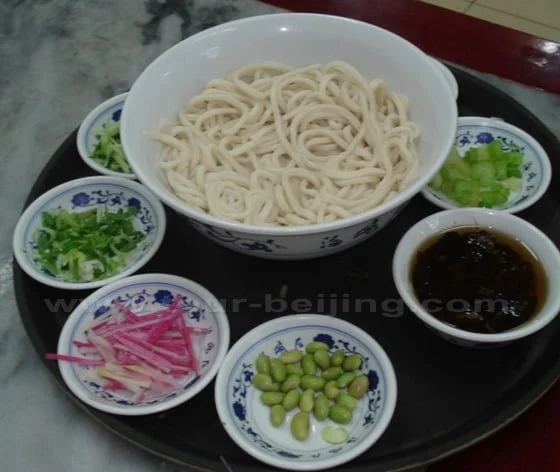
1. Zhajiangmian: noodles with soybean sauce
Zhajiangmian (炸酱面) brings wheat noodles together with a savoury fermented-soybean sauce and vegetable garnishes. Mix the sauce into the noodles gradually: the sauce can be quite salty, and the vegetables balance its richness. The meat version commonly contains pork, so ask about the sauce before ordering if you avoid it.
A bowl makes a practical lunch between sightseeing stops. Ask whether the garnishes come separately and whether a smaller portion is available if you want to try other dishes at the same meal. Our food and dining guide explains how to plan meals around the area you are visiting.
2. Peking duck: share a roast-duck meal
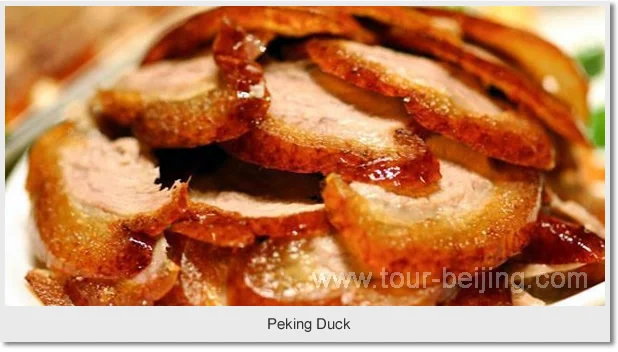
Beijing roast duck (北京烤鸭) is usually served sliced, with thin pancakes, vegetables and a sweet bean sauce. Put a little of each into a pancake rather than overfilling it. Ask how much duck your party needs and which accompaniments are included; the listed duck price and the final cost of the whole meal may differ.
Book ahead for a meal that matters to your itinerary. Leave enough time to enjoy it, and check the branch address rather than navigating only by a well-known restaurant name. A roast-duck dinner can be an evening in itself; it does not need to be rushed into a performance package.
3. Shuan yangrou: thinly sliced lamb hot pot
Shuan yangrou (涮羊肉) centres on thin lamb slices cooked at the table, often with a sesame-based dipping sauce. It is especially comforting in cold weather, but is not restricted to winter. Choose a broth, meat, vegetables and a staple food, then cook ingredients fully according to the staff's advice.
The traditional copper pot is part of the experience, yet the restaurant's menu and cooking method matter more than the appearance of the pot. Ask about sesame, peanuts and other ingredients in dipping sauces if you have an allergy. A shared pot is not suitable for keeping allergens or meat completely separate.
4. Jingjiang rousi: shredded pork in sweet bean sauce
Jingjiang rousi (京酱肉丝) is shredded pork coated in a glossy savoury-sweet sauce, commonly served with scallions and thin tofu sheets for wrapping. It works well as one dish in a shared meal, alongside vegetables and a less rich soup or staple.
The name includes meat. Do not assume a tofu garnish makes the dish vegetarian, or that every kitchen offers the same substitute. Ask explicitly for a meat-free preparation and check the sauce and cooking stock if you need one.
5. Hot-and-sour soup: a warming accompaniment
Suanlatang (酸辣汤) gets its sourness from vinegar and its heat commonly from pepper. Recipes vary, and the soup may contain egg, tofu, mushrooms, bamboo shoots or meat. It is useful alongside dumplings or a shared meal, particularly when you want something warming without another large main dish.
Ask whether a serving is a small bowl or a table-sized portion. A soup described as hot and sour is not necessarily vegetarian; check the stock as well as the visible ingredients.
6. Jiaozi: choose the filling and cooking method
Jiaozi (饺子) are dumplings filled with combinations of meat and vegetables, or vegetarian fillings. They may be boiled, steamed or pan-fried. Pork and cabbage, pork and chive, and vegetable-and-egg versions are useful menu terms to recognise, but always confirm the actual filling.
Find out whether the price refers to a plate, a weight or a number of dumplings. For two people, a smaller mixed order can leave room for a vegetable dish. Vinegar and chilli are usually added to taste; try the dumplings before covering them with sauce.
7. Shaobing: a sesame-topped staple
Shaobing (烧饼) is a baked flatbread, often layered and topped with sesame seeds. Some versions are plain; others contain sweet or savoury fillings. It can accompany a lamb hot-pot meal or form part of a simple breakfast.
Check the filling rather than assuming all shaobing taste alike. Choose a freshly cooked portion where possible. Sesame is a defining ingredient in many versions, so this is a dish to avoid or discuss carefully with the seller if you have a sesame allergy.
8. Mi san dao: a rich traditional sweet
Mi san dao (蜜三刀) is a sweet fried pastry associated with a syrup or malt-sugar glaze. Its name refers to the characteristic cuts in the pastry. It is better treated as a small dessert or something to share than as the main part of a meal.
Ingredients and oils vary by maker. Ask about wheat, sesame, peanuts and other allergens rather than relying on the English name alone. If you are buying sweets to take away, ask how they should be stored and when they are best eaten.
Build a balanced food day
You do not need to order all eight dishes at once. Try noodles or dumplings at lunch, keep an afternoon snack small, and choose either roast duck or hot pot for a relaxed dinner. Add vegetables and water, and tell the restaurant about dietary requirements before the order is taken. Translated dish names help with ordering but cannot guarantee an allergen-free kitchen.
Tour Beijing's Beijing dining introduction provides additional local food background. Beijing Page is associated with Tour Beijing; any guided food experience should be chosen for its actual menu, neighbourhood and suitability for your group.